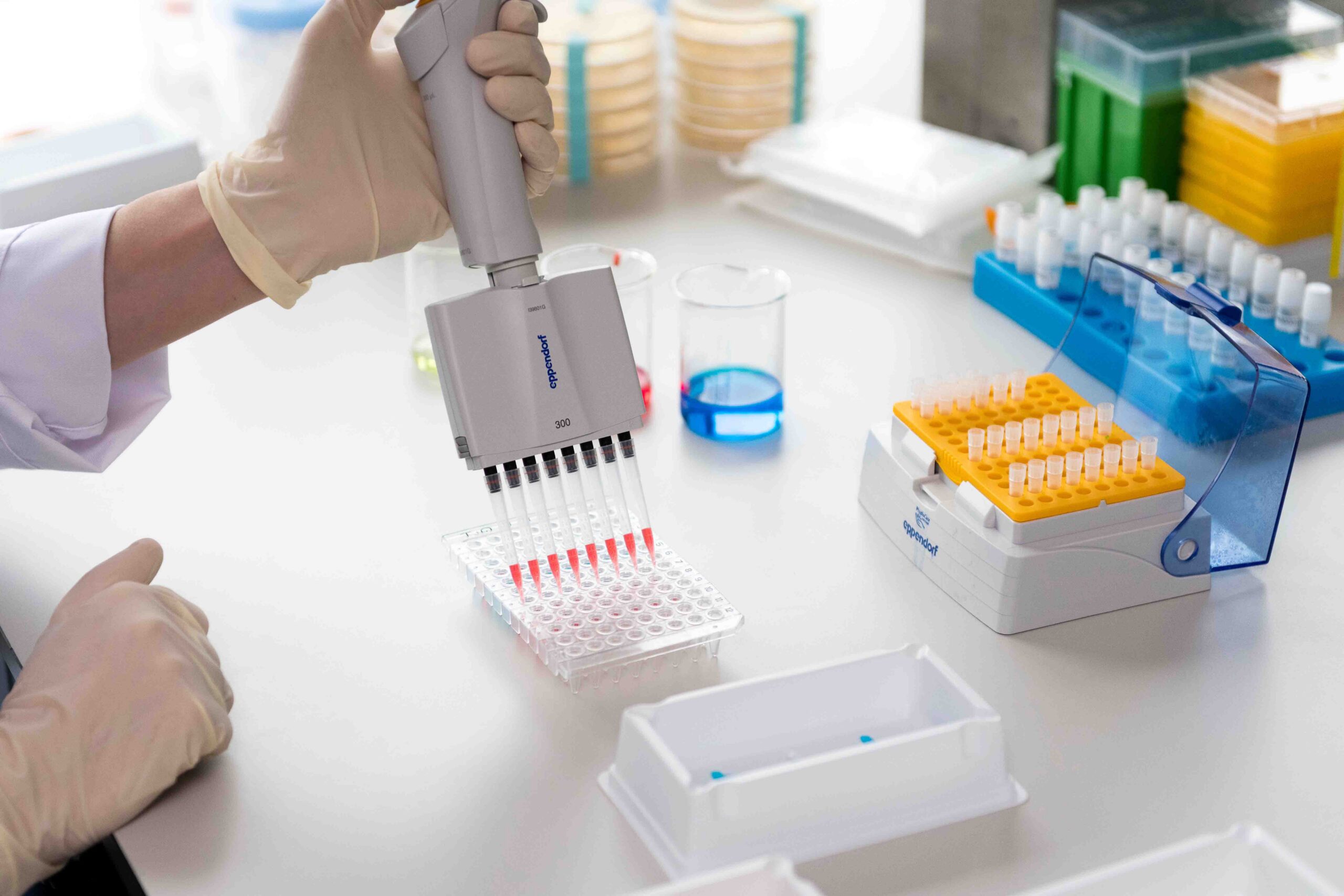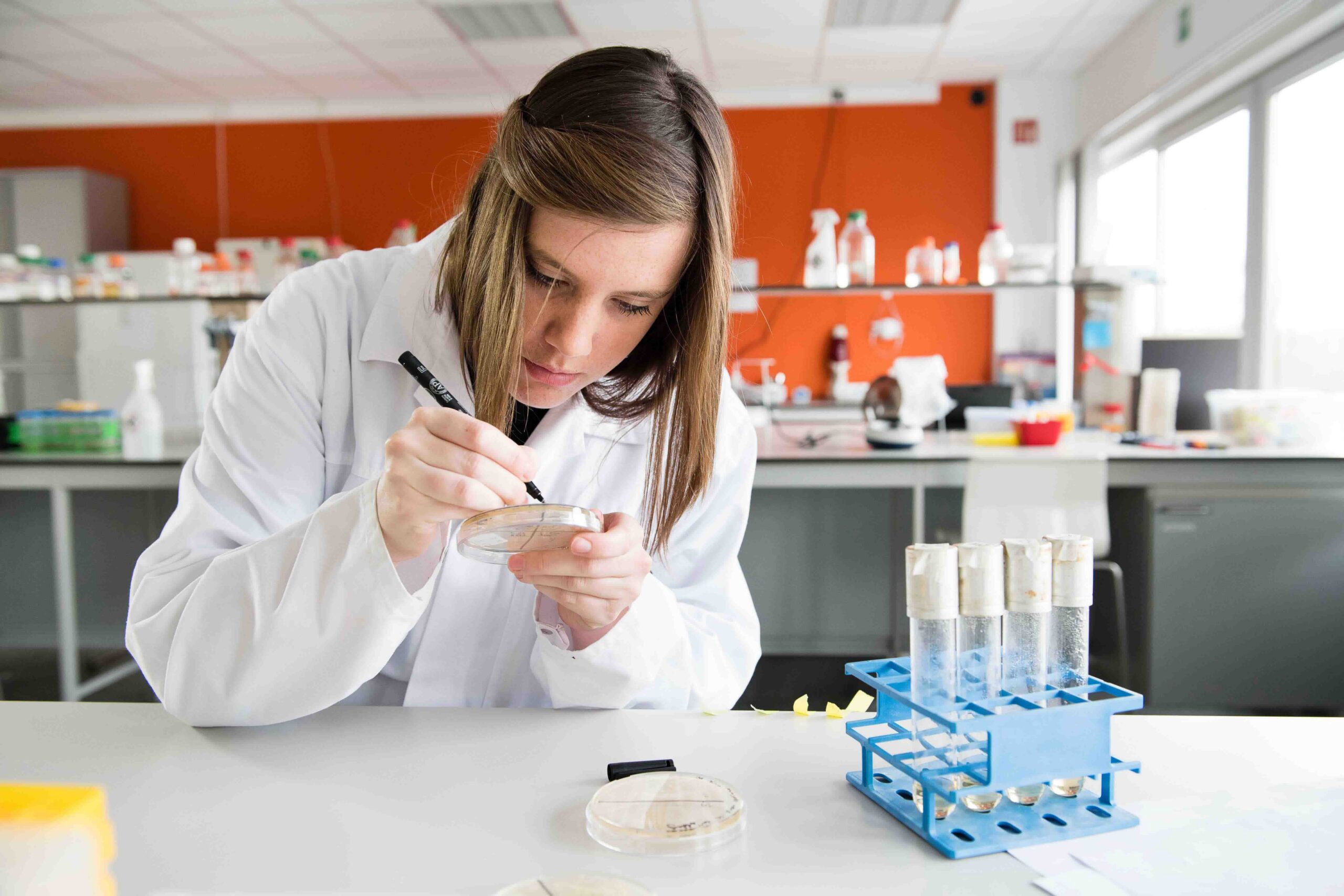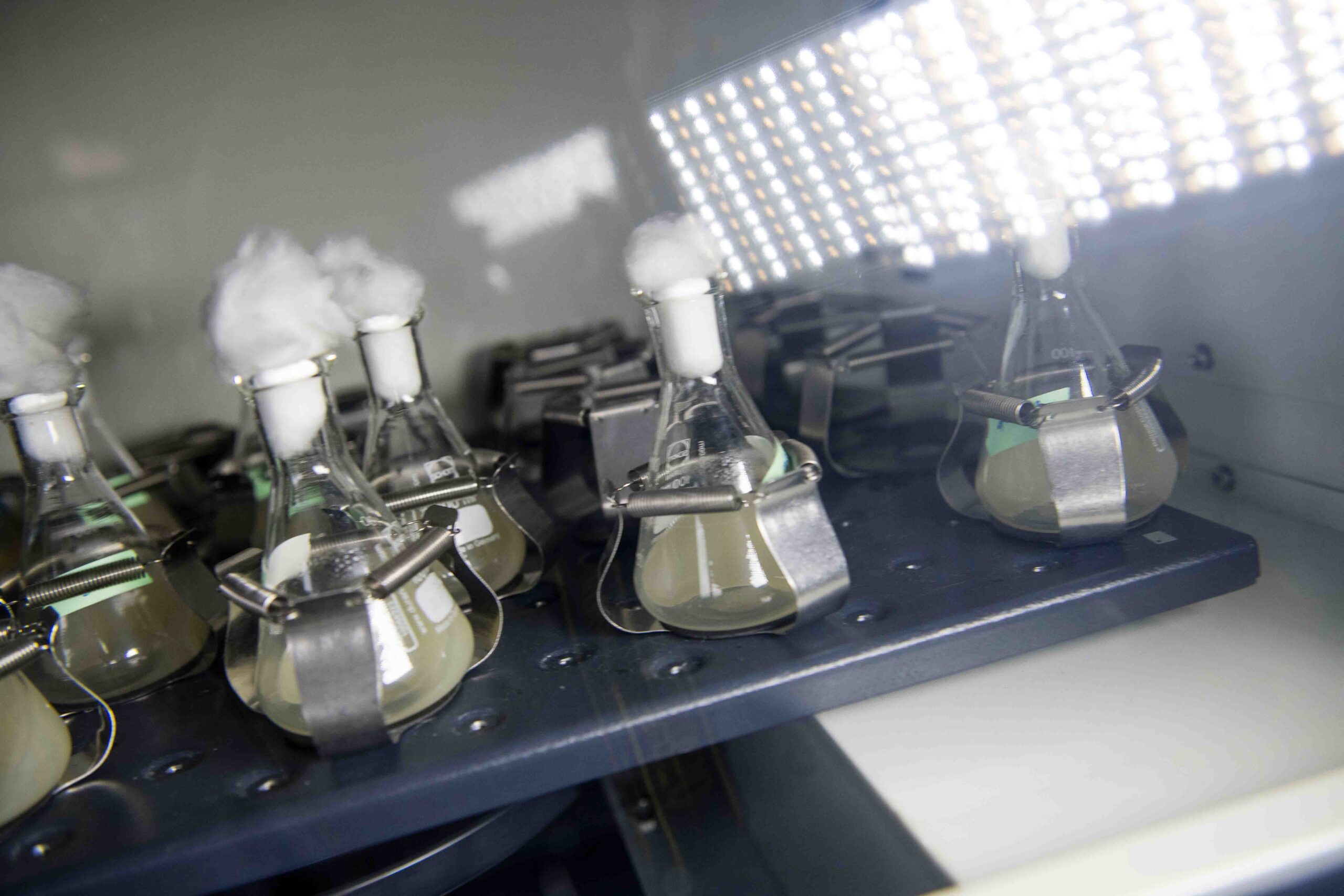
Strain engineering is where the HMO manufacturing process really begins. Before a bioreactor run can start, a host cell must be designed to make defined human milk oligosaccharides, or HMOs. E. coli is the most common host for commercial HMO production, because its genetics, growth behaviour and industrial handling are well understood, and because high yields have been well documented.
The basic idea is simple; the execution is less so. Glycosyltransferase genes are introduced, either on a plasmid, a small circular DNA element, or through chromosomal integration, where the genetic instruction is placed into the host genome. These enzymes transfer sugar units, in the form of activated sugars, onto an acceptor substrate. The exact gene set depends on the HMO structure being targeted.
Next, the cell must be prevented from doing what it naturally prefers to do. Key genes involved in lactose catabolism, the breakdown of lactose for energy, are deleted so that lactose can accumulate as the acceptor substrate. Enzymes in pathways that compete with product formation are also deleted or tuned down. Without these steps, the carbon flux tends to drift towards cell metabolism rather than product formation.
Precursor supply matters as well. Donor substrates, the activated sugar building blocks used by glycosyltransferases, must be available in sufficient amounts, so genes in precursor synthesis pathways are typically overexpressed.
For a deeper overview of the biological logic behind E. coli HMO fermentation, see our precision fermentation guide.
Fermentation starts well before the production vessel is filled. Commercial fermentation typically begins with a seed train, meaning a staged expansion of the engineered strain from a frozen working vial into progressively larger cultures. Typically, that path runs from shake flask to seed bioreactor, then into the production bioreactor. Industrial production bioreactors typically hold tens to hundreds of cubic metres.
The medium is doing a lot of work here. It usually contains mineral salts, trace nutrients, and a carbon source, typically sucrose or glucose. Lactose is included as the HMO acceptor substrate. In simple terms, it is the starting molecule that the cell modifies by adding sugar units during fermentation. The medium needs careful control because it shapes growth, cell physiology, and product formation. When that balance is slightly off, it usually appears later in the run, or even only during downstream handling.
Fed-batch fermentation is typically the industry standard in the manufacturing process of HMOs. Rather than adding all nutrients at the start, the carbon source is supplied gradually, either continuously or in pulses. The goal is controlled growth without overflow metabolism, where excess carbon is diverted into inhibitory byproducts instead of useful biomass and product.
During the run, manufacturers control dissolved oxygen, pH, temperature, and carbon dioxide stripping. Exact settings depend on the host and target HMO. Runs typically take one or a few days. The fermentation yield then comes down to how well the strain performs, how cleanly the feed is controlled, and whether the process stays stable from start to finish.
The commercial fermentation yield of HMOs has improved substantially over the past decade, driven by better strain engineering, media design, feeding strategies, and process control. In practical terms, modern production strains can now reach industrially meaningful titres for a range of HMO structures, including both established and more complex molecules.
Exact performance figures vary by HMO, strain background, fermentation mode, facility scale, and downstream recovery strategy. For that reason, yield is best discussed in the context of a specific molecule and manufacturing platform rather than as a universal benchmark.
From a production economics perspective, titre, yield and productivity remain the most important cost drivers. The process strives for a maximal ingredient output with a minimal cycle time, together reducing the cost of goods, provided that downstream recovery remains efficient and reproducible.
Once the fermentation is complete, the broth contains the target HMO, but also many contaminants such as cells, residual medium components, byproducts, salts, and host-cell proteins. The goal of downstream processing is to isolate the HMO and purify it to the required specification without damaging the molecule or creating unnecessary product loss. In practice, this is a multi-step train made up of several unit operations.
The first practical step is removing cells and cell debris from the fermentation broth. This is typically achieved through centrifugation or tangential flow microfiltration, where liquid passes across a membrane surface while solids are retained. Both approaches separate the biomass from the HMO-containing liquid phase.
That cell-free supernatant then moves into subsequent purification. In some process variants, cell disruption may be used first to release intracellular product, depending on localisation and strain behaviour.
Clarified broth typically still carries coloured compounds, residual proteins, salts, amino acids, and other process-related impurities. Decolourisation is often handled with activated carbon, which adsorbs coloured and hydrophobic compounds. Ion exchange can also be included at this point because many impurities carry a charge. It can help reduce salts, amino acids, and host-cell proteins. For E. coli-derived HMOs, endotoxin control needs particular care. Process teams may use specialised resins, filtration steps, or other validated removal methods, followed by standard analytical assays to check the result.
After early HMO downstream processing, the product stream is concentrated and polished. Nanofiltration and ultrafiltration, both membrane-based separations, can remove water and smaller molecules while retaining the HMO. Electrodialysis may also be used for salt removal, either as an alternative or alongside HMO purification chromatography. Final purity depends on use case, grade, and the specification for each HMO structure.
Most commercial HMO ingredients are supplied as powders. Spray drying turns the purified concentrate directly into a free-flowing, low-moisture powder. Crystallisation, where it works for a given structure, adds an extra purification step and can deliver very high purity, but it is generally slower and more costly, and the crystals still need to be dried.
So what does quality assurance look like once the process is complete? At this stage, every batch is typically held until all release data have been carefully reviewed by the quality assurance team. The release workflow is non-negotiable and checks identity, purity, safety, and consistency.
HMO analytical quality control manufacturing workflows usually combine structural confirmation, chemical purity testing, microbiology, and powder characterisation. Here is what is typically tested:
Parameter | Method | Specification (typical) |
Identity and purity (% HMO and other carbohydrates) | HPLC / HPAEC-PAD against reference standard | Meets product-specific specification with confirmed structure |
Host-cell residuals (endotoxin, protein, DNA) | LAL assay (endotoxin), protein assay, (q)PCR (residual DNA) | Meets product-specific specification |
Heavy metals | ICP-MS | Per regulatory limits |
Microbiology | Plate count and microbial-specific assays (e.g. Enterobacteriaceae, Salmonella, Cronobacter, yeasts and moulds) | Per application spec |
Moisture content | Karl Fischer | Meets powder specification |
Appearance | Visual / spectrophotometry | Meets product specification |
This table complements the quality control discussion in our broader precision fermentation guide. The important point is that specifications are not universal. They depend on the HMO structure, production process, intended application, and geographic regulatory and food-safety framework. Customer-specific requirements may apply here as well. Batch level evidence is usually summarised in a certificate of analysis.
Supplier evaluation should look beyond price per kilogram. For procurement teams and R&D managers, the useful question is whether the supplier can run a controlled HMO manufacturing process repeatedly, document it clearly, and support the intended application.
Start with the product specification sheet, and confirm that the ingredient indeed matches with the intended application. Then request certificate of analysis data, preferably across several batches to show batch-to-batch consistency, and look at variability in relevant parameters. Ask for samples to confirm the product quality yourselves, and for all certifications or quality standards that apply to the facility. The answers usually say a lot about manufacturing maturity, production process control measures, and quality culture.
Inbiose is specialised in the development and commercial-scale supply of HMOs. Connect with the team and discuss your project.
Once the HMO production strain is developed, each production batch goes through fermentation, downstream processing and quality control. The production strain, designed to make defined HMOs, is grown in a controlled bioreactor. After the fermentation run, the HMO is separated from cells, salts, proteins, and other process related material. Final testing checks identity, purity, safety, and batch consistency before release.
The 2’FL production process typically starts with an engineered E. coli strain that converts feedstock sugar and lactose into 2’FL under controlled fermentation conditions in large-scale bioreactors. Lactose is the acceptor substrate, while various sugars can be used as the main carbon source. In simple terms, a fucose unit is transferred from its activated donor substrate to lactose by specific enzymes inside the production strain. The resulting 2’FL is subsequently recovered from the fermentation broth during the downstream purification process.
HMOs are purified from the fermentation broth using a series of steps that may consist of filtration, activated carbon, and ion exchange chromatography. The process is designed to remove cells, salts, host-derived contaminants and other impurities, before the HMO is concentrated and dried.
Commercial HMO fermentation yield has improved sharply over the past decade, especially for the most established structures. Modern production platforms can now reach industrially meaningful titres, where titre means product concentration in the fermentation broth. Exact figures vary by molecule, strain, facility, and process design. Simpler structures such as 2’FL are generally more mature, while more complex structures can still be harder to produce efficiently.
For E. coli derived HMOs, endotoxin control is part of the downstream work. Endotoxin comes from the outer membrane of Gram-negative bacteria. Endotoxin can be reduced through specialised chromatography resins, filtration-based steps, adsorption, or a combination of these approaches. The finished batch is always checked with a standardised method (most often the Limulus Amoebocyte Lysate or LAL assay).
Spray dried HMO powder is made by atomising a concentrated liquid into hot air, producing a low-moisture, free-flowing powder. It is widely used because it is scalable and practical for ingredient handling. Crystallised HMO powder is formed through controlled crystal formation from solution. It can achieve higher purities, although the process is usually slower and more costly.
A released HMO batch should pass tests for identity, purity, microbiology, moisture, appearance, residual protein, heavy metals, and endotoxin where relevant. Carbohydrate purity is typically measured by high performance liquid chromatography. The precise acceptance limits are product specific. Buyers should expect a certificate of analysis with each batch.
HMO production cost has fallen substantially as strains, media, fermentation control, and purification trains have improved. The main drivers are titre, yield and productivity during the fermentation process, and product recovery during the downstream process. Increasing the titre and total HMO yield per bioreactor, decreasing the cycle time and optimising the product recovery during purification considerably improves the economics of the whole manufacturing process. The industry has moved from specialist gram to kg supply towards routine commercial multi-tonne scale ingredient production.
While Inbiose strives to ensure the accuracy and timeliness of the information presented in this document, the company makes no guarantees or assurances regarding the precision, reliability, or completeness of the content. This information is intended solely for scientific and technical purposes in business-to-business communications. Local regulations and requirements should be reviewed when considering product labeling or advertising to end consumers. The information provided does not constitute medical or scientific advice, diagnosis, or treatment, and is offered without any warranties, express or implied. Inbiose shall not be held liable for any damages resulting from the use or interpretation of the material presented herein. The reader assumes full responsibility for their use of the information. No liability is accepted for any infringement of patents resulting from the use of the information provided. Content may be updated without prior notice. For further information, please contact your local Inbiose representative. All trademarks mentioned are owned by or licensed to Inbiose unless otherwise noted.